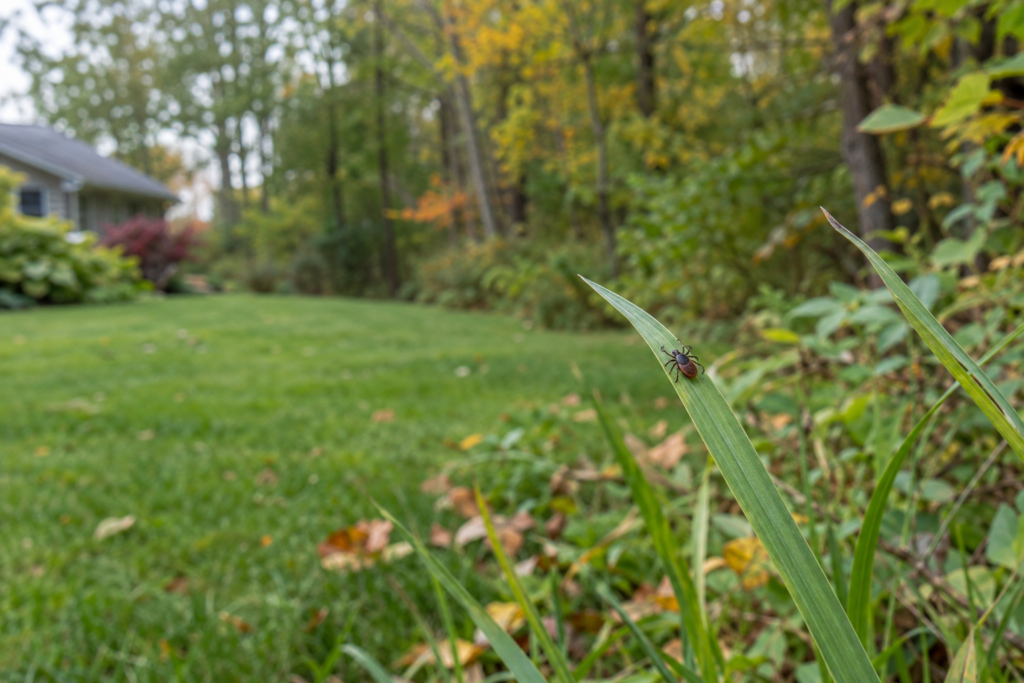
When ticks show up in the yard, it is natural to wonder whether a treatment can protect your family from Lyme disease and other tick-borne illnesses. A well-planned yard program can help lower tick numbers in treated areas, but it should be one part of prevention—not a promise that bites or illness cannot happen. Here is what homeowners around East Canton and Stark County should know.
WHAT YARD TREATMENT CAN DO
Ticks favor shady, humid cover, especially brush and leaf litter near the edge of a lawn. The Ohio State University notes that the majority of ticks are found within about 3 meters of the border between a lawn and wild or forested areas. Targeted pesticide applications may reduce tick populations for a short time, but ticks can rapidly repopulate a space. A treatment is not a permanent barrier around a property.
FEWER TICKS DOES NOT GUARANTEE FEWER ILLNESSES
This distinction matters. The CDC says outdoor pesticides can reduce the number of ticks in treated yard areas, but homeowners should not rely on spraying alone to reduce their risk of infection. Ohio State likewise notes that research has found pesticide applications may lower tick populations without lowering the chance of tick-borne disease. In other words, yard treatments can be a useful tick-management tool, but they cannot replace personal protection, tick checks, or prompt care if symptoms arise.
That is why a responsible plan avoids absolute promises. Keep checking people and pets after time outdoors, including after backyard play or gardening. Wear appropriate clothing in brushy areas, use repellents according to their labels, and remove attached ticks promptly with fine-tipped tweezers. If someone develops a fever, rash, or unusual aches after a tick bite, contact a healthcare professional.
PAIR TREATMENT WITH SIMPLE YARD CHANGES
Make the places your family uses less inviting to ticks. Keep grass mowed, clear leaf litter and brush along lawn edges, and move firewood piles away from the house. If your yard backs onto woods, consider a 3-foot-wide strip of wood chips or gravel between the lawn and wooded area. Place patios, play equipment, and seating in sunny areas away from dense vegetation when you can. The CDC recommends these landscaping steps to help reduce blacklegged tick populations and limit contact with tick habitat.
No single change eliminates ticks. Wildlife can carry them onto a property, and ticks may also arrive on clothing or pets. Check dogs and cats after outdoor time and ask your veterinarian which tick-prevention products are right for them.
ASK ABOUT APPLICATION AND RE-ENTRY
Before any yard treatment, ask which areas will be treated, what product is being used, and when people and pets may return. “Natural” or “organic” does not mean a product should be used without care. The EPA advises following label precautions and keeping pets and children away from treated areas as directed. Always follow the product label and the applicator’s directions; keep children and pets away from treated areas for the full period specified. Do not use a yard product on a person or pet unless its label specifically allows it.
Nature Spray Organics offers all-natural yard treatments for homeowners in East Canton, Canton, Alliance, Louisville, North Canton, Malvern, and the Lake Mohawk area. We can discuss the shaded borders, lawn edges, and outdoor spaces you want help managing, while keeping expectations realistic: treatment can support a broader prevention routine, not guarantee protection from tick-borne disease.
For a practical tick-management conversation about your property, call Nature Spray Organics at (330) 598-0003 or use the contact form on our website.